Thursday, August 2, 2018

" ENIF STAR & MESSIER 15 " ( in PEGASUS ) DESDE ROSARIO - ARGENTINA //// FOTOS: ESMERALDA SOSA


.. 1am ..


.. FRIO MODERADO y leves nubes sobre el WN ..


ESTRELLA ENIF 


Estrella ENIF ( epsilon PEGASUS )


Muy cercano MESSIER 15


MESSIER 15


Messier 15


Messsier 15 junto a Estrella ENIF


Messier 15


PARA VER FOTOS EN HD ABRIR SIGUIENTE LINK


Constelación del PEGASO ( Proyector PLANETARIO ZEISS )


info relacionada:


M57 / RING NEBULA Taken by Patrick Bosschaerts on July 3, 2018 @ Antwerp / Belgium


Orion VX12 f4 / Big Barlow 2x / AZ EQ6 Pro / Idas LPS / ASI 1600MC cool / 55 minutes total exposure / Nebulosity / Pixinsight / Photoshop.
Finally I begin to understand how to process images properly!

DUSTY VALLES MARINERIS AND SOLIS LACUS Taken by Sebastian Voltmer on July 25, 2018 @ Farm Hakos, Namibia


Mars on July 25, 2018. 20 Cassegrain (4500 mm), Baader FFC, IR-RGB filters. IAS-Observatory, Namibia.

Wednesday, August 1, 2018

WHAT'S UP FOR AUGUST 2018

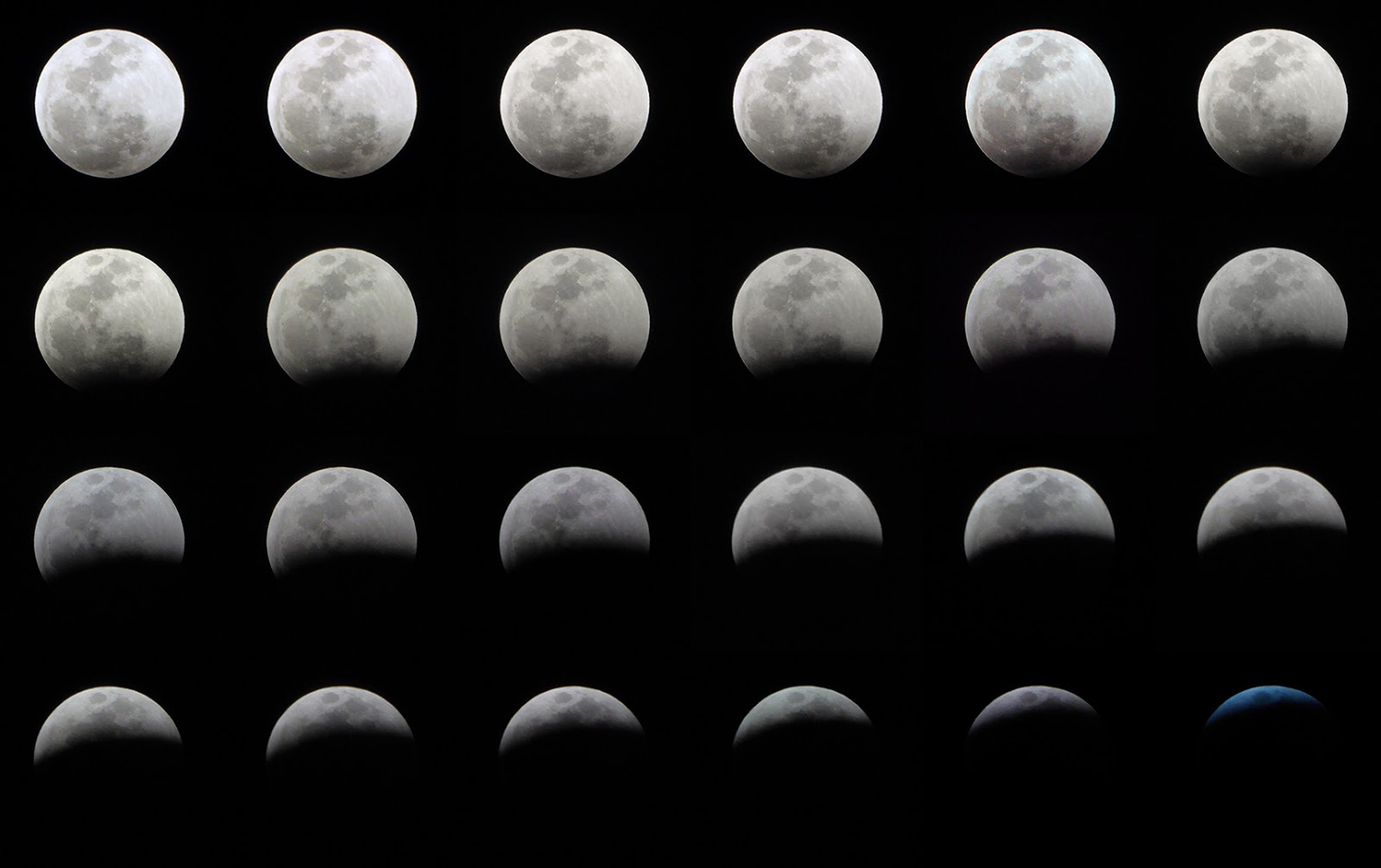
LUNAR ECLIPSE Taken by Peter Lowenstein on July 27, 2018 @ Mutare, Zimbabwe


The two 24 frame time-lapse mosaics show the entire total phase of the Lunar Eclipse between 21.21 & 23.21 LT and the approaching partial phase between 20.11 & 21.20 LT as recorded from Mutare on Friday 27 July 2018. The time interval between frames for the total phase is 5 minutes and that for the partial phase is 3 minutes. The total phase mosaic captures the colorful Chinese Lantern with Blue Ozone Fringe effects as the Earth’s Umbra encroached and retreated from the edge of the Moon and the beautiful orange and then deeper red Blood Moon during totality. The partial phase mosaic captures the Moon from when it was still shining very bright just before the Earth’s Umbra began to cast a shadow until it had been almost completely covered. The last frame (lower right) shows the bright Blue Ozone Fringe described in my post id-146694 on 29 July.

THE IRIS NEBULA IN A FIELD OF DUST Image Credit & Copyright: Franco Sgueglia & Francesco Sferlazza


What blue flower grows in this field of dark interstellar dust? The Iris Nebula. The striking blue color of the Iris Nebula is created by light from the bright star SAO 19158 reflecting off of a dense patch of normally dark dust. Not only is the star itself mostly blue, but blue light from the star is preferentially reflected by the dust -- the same affect that makes Earth's sky blue. The brown tint of the pervasive dust comes partly from photoluminescence -- dust converting ultraviolet radiation to red light. Cataloged as NGC 7023, the Iris Nebula is studied frequently because of the unusual prevalence there of Polycyclic Aromatic Hydrocarbons (PAHs), complex molecules that are also released on Earth during the incomplete combustion of wood fires. The bright blue portion of the Iris Nebula spans about six light years. The Iris Nebula, pictured here, lies about 1300 light years distant and can be found with a small telescope toward the constellation of Cepheus.

" MARS " DESDE ROSARIO - ARGENTINA /// FOTOS: ESMERALDA SOSA 01-08-2018


.. 3.55am ..


.. 2 CONGELANTES GRADOS DE TEMPERATURA ..


PARA VER FOTOS EN HD ABRIR SIGUIENTE LINK


.. BRILLANTE COMO NUNCA ! ..